 how-to
Avoiding Common Apartment Cleaning Mistakes
Table of Contents
- Why Apartment Cleaning Mistakes Cost More Than You Think
- 7 Common Apartment Cleaning Mistakes That Slow Down Turnovers
- Mixing Incompatible Cleaning Chemicals
- Using Too Much Product and Leaving Residue Buildup
- Cleaning in the Wrong Order (Bottom to Top Instead of Top to Bottom)
- Ignoring High-Touch Surfaces and Overlooking Tool Hygiene
- Using Harsh Chemicals on Delicate Surfaces and Appliances
- Over-Scrubbing Porous Surfaces and Neglecting Hard Water Stains
- Skipping Spot Testing and Ventilation
- Apartment Turnover Cleaning Checklist: A Room-by-Room Guide
- Essential Cleaning Tools for Property Managers
- How Long Does a Professional Apartment Turnover Take?
- Eco-Friendly Alternatives That Work in Apartments
- Maintenance vs. Deep Cleaning: What Apartments Actually Need
- Conclusion: Clean Smarter, Not Harder
- Frequently Asked Questions
Last Updated: October 2, 2026
Why Apartment Cleaning Mistakes Cost More Than You Think
Apartment cleaning mistakes cost property managers real money. Every missed detail during a turnover adds time, labor, and lost rent. At Squeaky Clean Plus, we see the same problems repeat across Denver apartment communities. A rushed clean means a unit sits vacant longer. That is money gone for good.
7 Common Apartment Cleaning Mistakes That Slow Down Turnovers
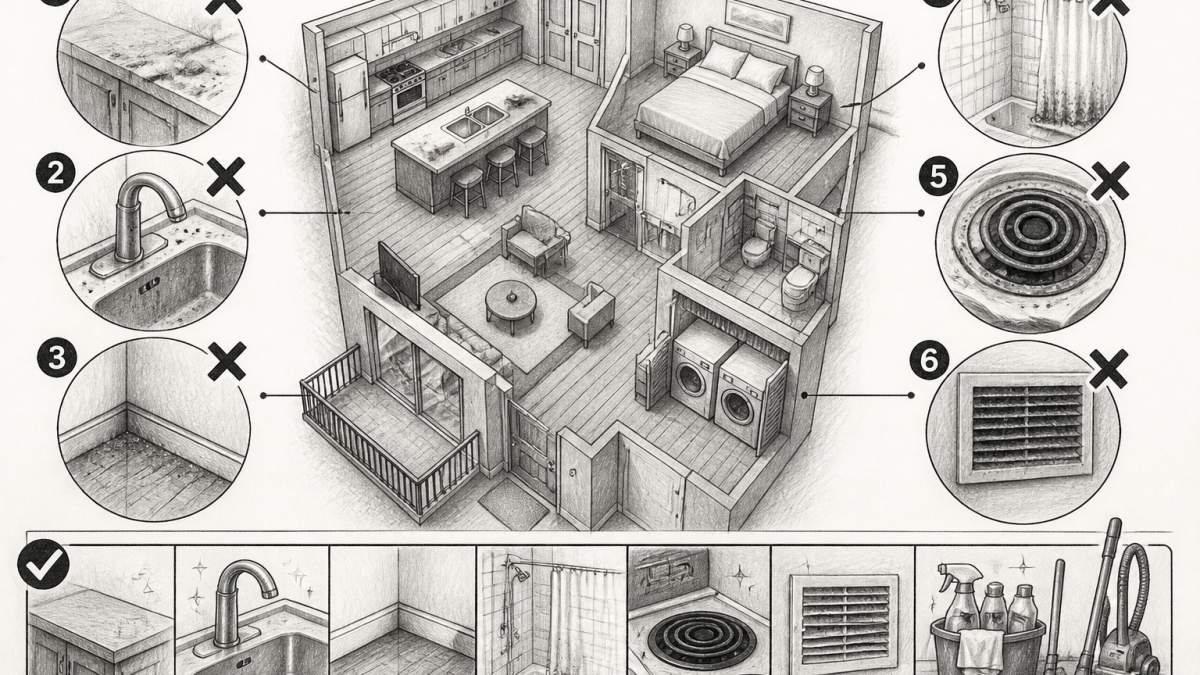
Most turnover delays trace back to seven repeatable errors. Fix these and your units move faster. The list below covers chemical safety, surface care, and workflow order.
Mixing Incompatible Cleaning Chemicals
Bleach and ammonia create toxic fumes when combined. So do bleach and vinegar. These mixes can cause breathing problems in small, poorly ventilated units. The EPA's guidance on safe cleaning product use warns against mixing products unless the label says it is safe. Always read labels before combining anything. When in doubt, use one product at a time.
Using Too Much Product and Leaving Residue Buildup
More soap does not mean a cleaner unit. Extra product leaves a sticky film that attracts dust and dirt. That film shows up as streaks on floors and counters. Dilute concentrates to the label ratio. Rinse microfiber cloths often. A little product goes a long way.
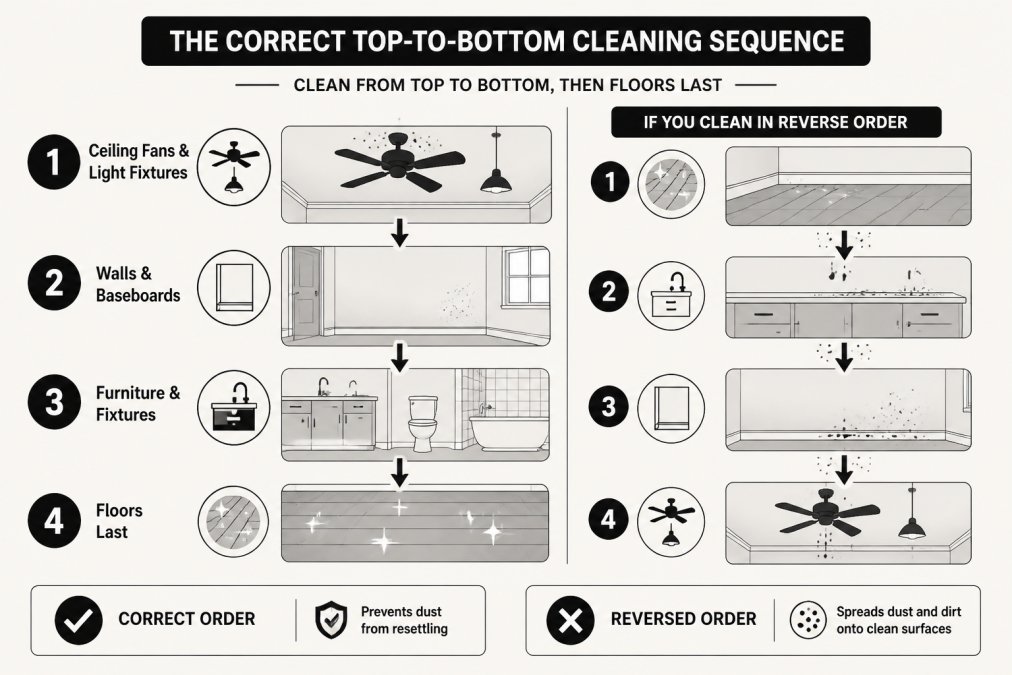
Cleaning in the Wrong Order (Bottom to Top Instead of Top to Bottom)
Dust falls. If you clean floors first, you will clean them twice. Start high and work down. Here is the order that works:
- Dust ceiling fans and light fixtures
- Wipe walls, switch plates, and baseboards
- Clean furniture and fixtures
- Vacuum and mop floors last
This one change cuts rework time on every unit.
Ignoring High-Touch Surfaces and Overlooking Tool Hygiene
High-touch surfaces spread germs fast. Light switches, door handles, cabinet pulls, and thermostats need attention on every turnover. A dirty sponge or mop just moves bacteria around. It causes cross-contamination between rooms and units. Swap sponges often. Wash mop heads after each use. Color-code cloths by area to stop the spread.
Using Harsh Chemicals on Delicate Surfaces and Appliances
Abrasive cleaners scratch stainless steel, glass, and sealed stone. They strip the finish and leave dull spots. Harsh products also damage appliance coatings. Use pH-neutral cleaners on most surfaces. Match the product to the material. When unsure, test a small hidden area first.
Over-Scrubbing Porous Surfaces and Neglecting Hard Water Stains
Porous surfaces like grout, unsealed tile, and natural stone soak up liquid. Scrubbing too hard pushes dirt deeper and wears the surface. Hard water stains need the right product, not more force. Mineral deposits build up on faucets, shower doors, and toilets. A mild acid cleaner breaks them down. Let it sit, then wipe. Never scrub marble or travertine with acid.
Skipping Spot Testing and Ventilation
Spot testing takes ten seconds and saves a surface. Test any new product in a hidden spot first. Ventilation matters just as much. Small apartments trap fumes. Open windows and run fans while cleaning. Good airflow protects your crew and improves indoor air quality.
Apartment Turnover Cleaning Checklist: A Room-by-Room Guide
A written checklist keeps every unit consistent. Use this one as a starting template. Adjust it for your property's finishes and fixtures.
Request Walk Thru Estimate Today →
Kitchen
- Degrease range hood and stovetop
- Wipe cabinet fronts inside and out
- Clean and deodorize refrigerator
- Run dishwasher with cleaner
- Scrub sink and disinfect handles
Bathroom
- Treat hard water stains on fixtures
- Scrub grout lines
- Disinfect toilet, including base
- Clean mirror streak-free
- Wash and disinfect floor
Living Areas and Bedrooms
- Dust ceiling fans and light fixtures
- Wipe baseboards and switch plates
- Vacuum carpets and edges
- Clean windows and tracks
- Disinfect door handles and thermostats
Whole Unit
- Check ventilation and airflow
- Replace HVAC filter if needed
- Final walkthrough with checklist
Essential Cleaning Tools for Property Managers
The right tools cut turnover time and improve results. Property managers should stock a standard kit for every crew. Here is what belongs in it:
- Microfiber cloths in color-coded sets
- Two mop heads per unit, washed between uses
- pH-neutral all-purpose cleaner
- Mild acid cleaner for mineral deposits
- Grout brush and soft detailing brush
- HEPA vacuum for fine dust and post-construction particles
- Spray bottles with measured dilution marks
- Personal protective equipment for each cleaner
How Long Does a Professional Apartment Turnover Take?
A professional apartment turnover takes about two to four hours for a standard one-bedroom unit. Larger units and heavy soil take longer. Post-construction cleaning can take a full day.
Eco-Friendly Alternatives That Work in Apartments
Eco-friendly products work well in apartments, and they cut fumes in tight spaces. Look for plant-based formulas and third-party certifications. The EPA Safer Choice program labels products that meet safety and performance standards. These products handle most routine cleaning jobs.
Maintenance vs. Deep Cleaning: What Apartments Actually Need
Most cleaning articles treat every task as if it belongs on the same list. That is the fastest way to blow a turnover budget. The distinction that actually matters in apartment operations is not "clean vs. dirty", it is maintenance vs. deep cleaning, and knowing which one a unit needs before the crew arrives.
The Real Difference
Maintenance cleaning is a reset. It removes soil that accumulated during normal occupancy: dust, light grease, bathroom film, vacuum lines, fingerprints. It assumes the unit was reasonably cared for and the finishes are intact.
Trigger Criteria: Which One Does This Unit Need?
Use these signals to route a unit before scheduling:
Maintenance indicators
- Tenant occupied for less than 12 months with no complaints
- No pets, no smoking, no reported water issues
- Appliances clean on visual inspection
- Carpet shows vacuum lines, not traffic lanes
- No odor when you walk in
Deep cleaning indicators
Request Walk Thru Estimate Today →
- Tenancy longer than 18 months, or any tenancy with pets
- Smoking or vaping inside the unit
- Visible grease film on cabinet fronts above the range
- White or chalky scale on faucets, shower heads, or glass
- Dark grout lines in the bathroom or kitchen
- Musty or pet odor that persists after airing out
- Any evidence of pest activity
Post-construction indicators
- Drywall dust on every horizontal surface, including inside cabinets and on top of door frames
- Paint overspray on floors, outlets, and fixtures
- Adhesive residue from protective film
- Debris in drains and HVAC returns
Time and Scope by Category
| Task Type | Frequency | Best For | Typical Time | Crew Size |
|---|---|---|---|---|
| Routine maintenance | Every turnover | Light soil, quick resets | 2-3 hours | 1 cleaner |
| Deep cleaning | Every 12-18 months, or after heavy use | Grease, scale, odor, pet soil | 4-8 hours | 2 cleaners |
| Post-construction | After any renovation | Fine dust, debris, overspray | Full day | 2-3 cleaners |
These are working ranges, not guarantees. A 600-square-foot studio with light soil can finish in under two hours. A 1,200-square-foot two-bedroom with pets and a long tenancy can push past eight.
The Sustainable-Routine Angle Most Guides Miss
The reason turnover cleaning fails is not that crews are lazy. It is that property managers try to solve a deep-cleaning problem with a maintenance-cleaning budget, or the reverse, they deep clean every unit and burn money on units that did not need it.
The fix is a two-tier schedule:
- Every turnover: maintenance clean, with a written checklist and photo documentation.
- Every 12-18 months, or on any deep-cleaning trigger: schedule a deep clean as a separate line item, not folded into the turnover.
- After any renovation: post-construction clean with HEPA filtration, never a standard turnover clean.
Where the Budget Actually Goes
The cost driver in apartment cleaning is not the hourly rate, it is the number of visits. A unit that fails inspection and needs a return trip costs roughly double a unit that passed the first time. A unit that needs deep cleaning on a turnover schedule costs more than a unit that was deep cleaned on its own schedule six months earlier.
Route every unit before you schedule it. Maintenance for light soil, deep cleaning for buildup, post-construction for renovation dust. The wrong category costs more than the wrong crew.
Conclusion: Clean Smarter, Not Harder
Every missed detail during a turnover costs time and rent. The fix is not more effort. It is better order, better tools, and better habits. Start with the seven mistakes above. Build a checklist. Train your crew on tool hygiene and ventilation.
Frequently Asked Questions
What are the most common apartment cleaning mistakes that damage surfaces?
The biggest culprits are using abrasive cleaners on delicate finishes, over-scrubbing porous surfaces like grout and laminate, and applying harsh chemicals to appliances without spot testing. These actions can scratch stainless steel, etch glass, strip sealants, and leave permanent marks. Always match the cleaner to the surface type and test in a hidden area first. For high-turnover units, stick with pH-neutral cleaners and microfiber cloths to protect surface integrity while still removing grime effectively.
How do cleaning mistakes impact the security deposit return process?
Cleaning mistakes often leave behind residue buildup, hard water stains, or chemical damage that landlords may charge tenants for. For example, using too much product can create a sticky film that attracts dirt, while abrasive scrubbing can scratch countertops or tubs. These issues can be interpreted as neglect, leading to deposit deductions. A thorough apartment turnover cleaning checklist helps ensure nothing is missed, reducing disputes and keeping the unit move-in ready for the next resident.
Why is using the wrong cleaning agent a common apartment maintenance mistake?
Many cleaning agents are formulated for specific surfaces. Using an acidic cleaner on natural stone can etch the surface, while bleach on stainless steel can cause pitting. Mixing ammonia and bleach creates toxic fumes. In apartments, where ventilation may be limited, these mistakes are both damaging and hazardous. Always read labels, choose pH-neutral options for general cleaning, and ventilate the space by opening windows and running fans during and after cleaning.
How can property managers avoid cross-contamination during turnover cleaning?
Cross-contamination happens when dirty tools move germs from one area to another. Use color-coded microfiber cloths for different zones (e.g., red for bathrooms, blue for kitchens), and launder them after each unit. Replace sponges frequently or use disposable wipes for high-touch surfaces. Mop heads should be rinsed and dried between units. For efficient turnovers, keep a dedicated set of tools per unit or use a professional service that follows strict tool hygiene protocols.