 how-to
How to Clean Vacant Homes for Realtors: A Step-by-Step Guide
Table of Contents
- Why Clean Vacant Homes for Realtors Matters for Faster Sales
- Vacant Home Cleaning Checklist: What to Cover Before Listing
- Foreclosure Cleanout vs. Standard Move-Out Cleaning
- How to Handle Debris, Trash, and Abandoned Belongings
- Foreclosure Cleanout Costs: What Realtors Should Budget
- Preparing Vacant Properties for Real Estate Photography
- Real Estate Property Turnover Services: When to Hire a Pro
- Frequently Asked Questions
Last Updated: October 2, 2026
Why Clean Vacant Homes for Realtors Matters for Faster Sales
A vacant house shows every flaw.
At Squeaky Clean Plus, we handle property turnover and post-construction cleaning for apartment communities and vacant homes.
Here's the reality: buyers decide in seconds. A dirty property signals neglect, and that suspicion follows them through every room.
This guide walks through a room-by-room cleaning checklist, how foreclosure cleanouts differ from standard move-outs, and when to bring in a professional crew.
Vacant Home Cleaning Checklist: What to Cover Before Listing
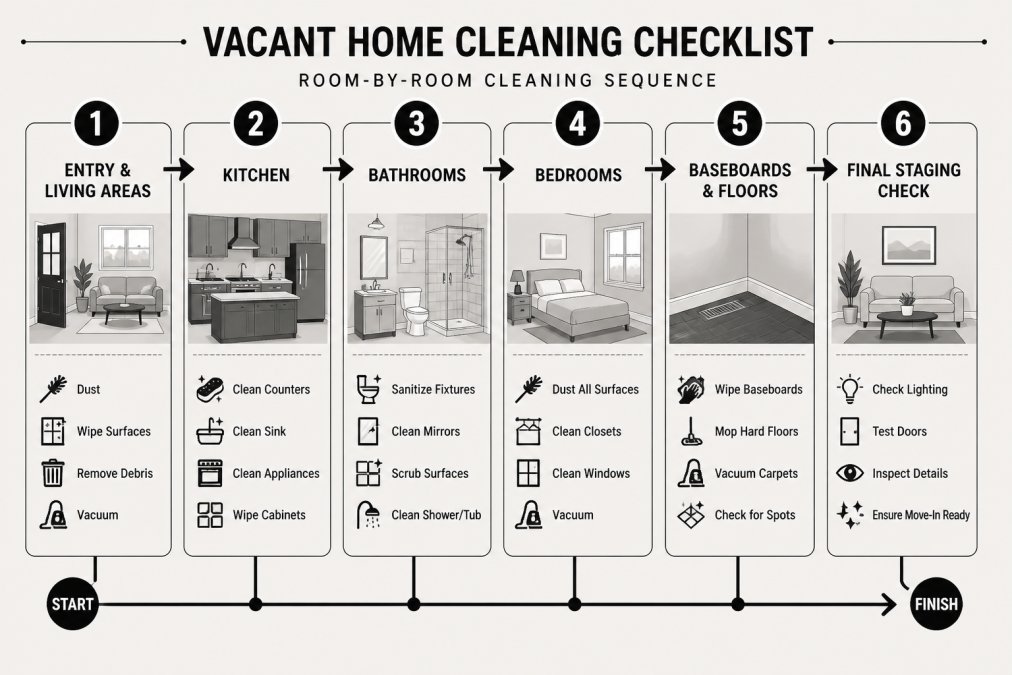
A vacant home cleaning checklist covers every surface a buyer will see, touch, or smell. Work top to bottom, back to front, and finish with floors last so you never clean them twice.
Here's the sequence that works:
- Entry and living areas: wipe walls, clean light fixtures, dust ceiling fans
- Kitchen: degrease the range hood, clean inside the oven, wipe cabinet fronts
- Bathrooms: scrub grout, remove hard water stains, disinfect every fixture
- Bedrooms: dust closets, wipe window tracks, clean blinds
- Baseboards and trim: wipe down after dusting, not before
- Floors: vacuum, then mop or steam last
- Final walkthrough: check for missed spots under bright light
Room-by-Room Cleaning Standards
Kitchens and bathrooms carry the most weight with buyers. Grease film on cabinets and soap scum in showers read as "this house wasn't cared for."
Focus your effort here:
- Kitchen: degrease the range hood filter, clean behind the refrigerator, wipe inside all appliances
- Bathrooms: scrub grout lines, remove toilet rings, polish faucets until they shine
- Bedrooms: dust ceiling fans and vents, wipe closet shelves, clean window tracks
- Living areas: spot-clean walls, dust blinds, wipe switch plates and door handles
Baseboards, vents, and light switches are the details buyers notice without knowing why. Clean those and the whole house feels cared for.
Pre-Listing Inspection Checklist for Realtors
A pre-listing walkthrough catches problems before a buyer's inspector does. Walk the property with a notepad and check these items:
- No visible dust on any surface, including ceiling fan blades
- All floors vacuumed and mopped, no debris in corners
- Appliances wiped inside and out
- Grout and caulk free of mold or stains
- No odors, musty or otherwise
- Windows and tracks clean inside
- Baseboards and trim wiped
- All trash and debris removed from the property
If any box stays unchecked, the listing isn't ready.
Foreclosure Cleanout vs. Standard Move-Out Cleaning
A foreclosure cleanout removes everything left behind. A standard move-out cleaning assumes the property is already empty and just needs cleaning.
That's the core difference, and it changes the scope, the crew size, and the timeline.
Foreclosure properties often sit vacant for months. You may find:
Request Walk Thru Estimate Today →
- Abandoned belongings, furniture, and personal items
- Trash, yard waste, and accumulated mess
- Pest problems or water damage
- Appliances and fixtures in as-is condition
Standard move-out cleaning covers dusting, wiping, scrubbing, and floor care in an empty home.
For realtors, the mistake is budgeting for one and getting the other. A foreclosure cleanout can take two to three times longer.
How to Handle Debris, Trash, and Abandoned Belongings
Abandoned belongings create legal risk, not just physical clutter. In most states, landlords and agents must follow specific notice and storage rules before disposing of a tenant's property.
Follow this process:
- Document everything with photos and a written inventory before touching anything
- Check your state and local rules on abandoned property notice periods
- Separate items into trash, donation, and hold categories
- Store hold items securely for the required notice period
- Arrange trash hauling and debris removal after the hold period ends
The HUD guidance on abandoned property in federally assisted housing outlines how notice and disposal rules work for covered properties.
Hazardous waste needs separate handling. Paint, solvents, batteries, and electronics cannot go in a standard dumpster. Many areas run household hazardous waste collection programs for exactly this reason.
Foreclosure Cleanout Costs: What Realtors Should Budget
Foreclosure cleanout costs depend on property size, debris volume, and how much hauling is needed.
Bucket 1: Labor. Most crews price labor by the hour per worker or by the square foot of the property.
Bucket 2: Disposal. Dumpster rental and landfill tipping fees are usually billed separately from labor.
Bucket 3: Specialty handling. Paint, solvents, batteries, electronics, and appliances with refrigerant cannot go in a standard dumpster.
What drives the price up or down:
- Square footage: larger homes take longer to clear and clean
- Debris volume: a packed garage costs more than an empty one
- Hauling distance: disposal fees and travel add up
- Condition: pest issues, water damage, or biohazards raise the scope and may require specialized crews
- Access: a third-floor walk-up or a blocked driveway adds labor time
Preparing Vacant Properties for Real Estate Photography
Real estate photography exposes every flaw. A camera captures dust, streaks, and smudges that the eye skips over in person.
Before the photographer arrives:
- Clean all windows inside and out for natural light
- Wipe every surface at camera height, including counters and tables
- Remove all trash, debris, and personal items
- Replace burnt-out bulbs so lighting stays even and color temperature matches room to room
- Clear the driveway and entryway for curb appeal
- Remove or straighten outlet covers, switch plates, and vent grilles that show in frame
Staging-ready cleaning standards go one step further. Photographers shoot wide, so anything in frame needs to be clean. That means:
Request Walk Thru Estimate Today →
- Window tracks and sills: visible in every window shot and a common dust trap
- Light fixtures and ceiling fans: blades and glass shades show dust against bright ceilings
- Baseboards and door casings: scuffs and dust read as neglect in wide shots
- Floors: streak-free and reflective, with no visible mop marks or footprints
- Grout and caulk: discoloration shows up sharply in bathroom and kitchen photos
- Reflective surfaces: stainless appliances, glass tables, and mirrors need streak-free polish because they double every smudge
A practical sequence is to clean the room top to bottom, then walk it once with the lights on and a phone camera at chest height.
Professional cleaning before photography is not optional. Blurry or dusty photos get skipped. Sharp, clean photos get clicks, and clicks turn into showings.
Real Estate Property Turnover Services: When to Hire a Pro
Real estate property turnover services handle the cleaning, hauling, and prep between one occupant leaving and the next arriving. Hire a pro when the timeline is tight, the property is large, or the condition is beyond a standard clean.
Signs it's time to call in a crew:
- You have a 48-hour window between move-out and showings
- The property has debris, abandoned items, or hazardous materials
- Post-construction dust coats every surface
- You manage multiple units and cannot coordinate crews yourself
Squeaky Clean Plus specializes in apartment turnovers and post-construction cleaning. We assign dedicated project coordination to every client, so you're not juggling three vendors and a painter's schedule.
Liability and Insurance for Realtors
Liability and insurance protect realtors when a cleaning crew works on a listed property. Ask every vendor for a certificate of insurance before work begins.
What to verify:
- General liability coverage: protects against property damage during the job
- Workers' compensation: covers crew injuries on site
- Contractor liability terms: confirms who pays if something breaks
Without proof of insurance, a damaged fixture or an injured worker becomes your problem. Get the certificate in writing, and keep it on file for every property you manage.
Cleaning vacant homes for realtors comes down to speed and consistency. Every day a property sits dirty is a day it sits unsold.
Frequently Asked Questions
What is included in a standard vacant home cleaning service?
A standard service covers deep cleaning of kitchens and bathrooms, dusting all surfaces, wiping baseboards, floor care, appliance detailing, and trash removal. For vacant homes, it also includes sanitization and preparing the property for showings. Realtors should request a written scope that lists every room and surface so nothing is missed during the final walkthrough.
How much do foreclosure cleanout costs typically run?
Foreclosure cleanout costs vary based on property size, debris volume, and whether hazardous waste is present. Because abandoned belongings and trash hauling add labor and disposal fees, get a written estimate after a walkthrough. Squeaky Clean Plus can provide a custom quote for your property.
How long does a full vacant property turnover take?
The duration of a vacant property turnover depends on square footage, condition, and the amount of debris. Properties with heavy accumulation or foreclosure cleanout needs may take longer. Scheduling the cleaning before photography and showings ensures the home is ready for the next phase without delays.
What should realtors look for when hiring a cleaning partner?
Look for a company with experience in vacant homes and foreclosure cleanouts, proper contractor liability insurance, and a clear scope of work. Ask about turnaround times, how they handle hazardous waste disposal, and whether they coordinate with other vendors. A dedicated project coordinator keeps your listing schedule on track and reduces last-minute surprises.