 blog
blog
Denver Post-Construction Cleaning Services: 2026 Guide
Table of Contents
- What Denver Post-Construction Cleaning Services Actually Handle
- Post-Construction Cleaning Checklist: From Debris Removal to Final Touch-Ups
- Rough vs Final Construction Cleaning: Why the Sequence Matters
- Cost of Post-Construction Cleaning Per Square Foot: What Drives the Number
- Safety and Compliance: OSHA Standards and Hazard Removal on Site
- Timeline and Scheduling: Coordinating Crews for a 48-Hour Turnaround
- Why Property Teams Choose Denver Post-Construction Cleaning Services
- Frequently Asked Questions
Last Updated: September 18, 2026
What Denver Post-Construction Cleaning Services Actually Handle
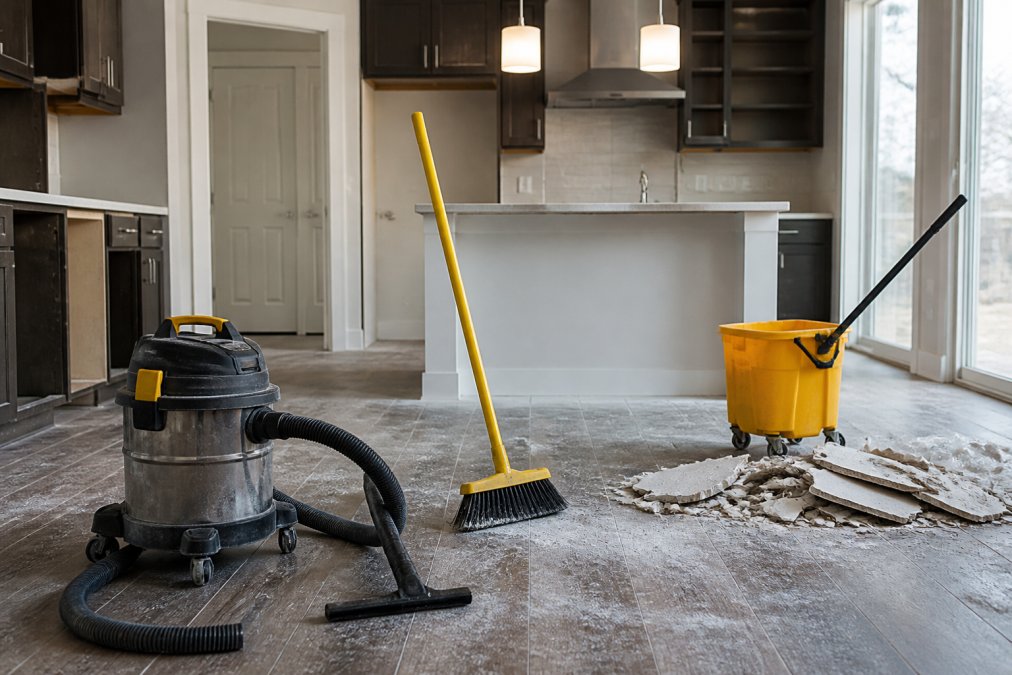
Denver post-construction cleaning services remove the fine dust, debris, and residue that construction crews leave behind, turning a raw job site into a move-in ready space. This guide from Squeaky Clean Plus breaks down the scope, the sequence, and the scheduling that keeps projects on track.
Beyond a Standard Janitorial Clean
Post-construction cleaning is the specialized process of removing construction residue from a completed or nearly completed build. It differs from routine office or apartment cleaning in three ways: the volume of debris, the type of particles, and the equipment required.
Post-Construction Cleaning Checklist: From Debris Removal to Final Touch-Ups
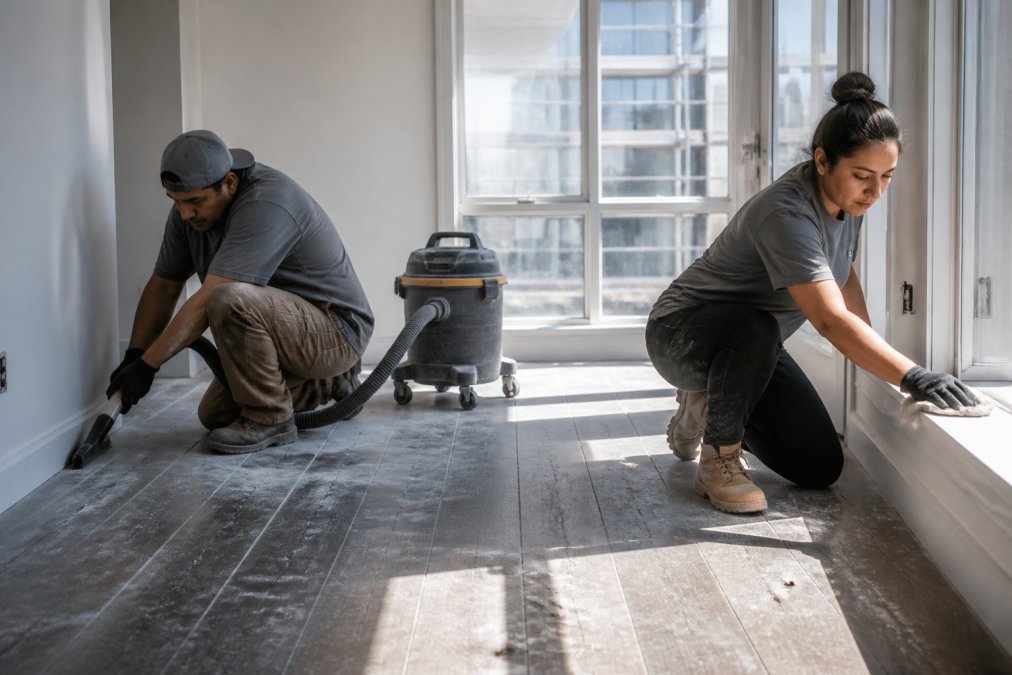
A post-construction cleaning checklist moves through phases, from rough debris removal to final detail work, so nothing gets missed between the dumpster and the doorknob. The order matters as much as the tasks themselves.
The 12-Point Turnover Checklist
A typical sequence for unit turnover includes:
- Clear large construction waste and packaging
- Remove protective film from windows, fixtures, and appliances
- HEPA-vacuum all surfaces, including walls and ceilings
- Wipe down HVAC vents and replace filters
- Scrape paint splatter from glass, tile, and hardware
- Remove adhesive and grout residue from floors and fixtures
- Clean window tracks and frames
- Detail kitchen and bathroom fixtures
- Polish and seal hard floors
- Sanitize high-touch surfaces
- Final dust inspection under raking light
- Walkthrough with the site supervisor
That last step is where most jobs succeed or fail. Dust that looks invisible under normal light shows up immediately under a raking light aimed along a wall.
Rough vs Final Construction Cleaning: Why the Sequence Matters
Rough cleaning happens mid-project, while trades are still working, and final cleaning happens after all construction is complete. Skipping the rough phase pushes far more work into the final pass, which slows the turnover.
When to Schedule Each Phase
A common approach is to schedule rough cleaning after framing and drywall, then again after painting and flooring. Final cleaning comes once every trade has left the site.
| Phase | When It Happens | Primary Focus |
|---|---|---|
| Rough cleaning | After drywall and framing | Bulk debris, surface dust |
| Second rough pass | After paint and flooring | Fine dust, residue |
| Final cleaning | After all trades exit | Detail work, fixture polish |
| Touch-up | Day of walkthrough | Last-minute dust and smudges |
Cost of Post-Construction Cleaning Per Square Foot: What Drives the Number
Most providers quote post-construction cleaning by the square foot, then adjust that base rate for condition, debris volume, and how many trades were on site. Property teams often compare quotes that were not built the same way.
Pricing models often include:
- A base rate per square foot
- Adjustments for condition, such as heavy residue, paint overspray, or grout haze
- Add-on services like HVAC vent cleaning, exterior window washing, or waste hauling
A Square-Footage Framework
Rates vary by market and provider. Use the following as a comparison tool, not a fixed quote.
| Project Type | Typical Base Rate Range (per sq ft) | What Drives the Multiplier |
|---|---|---|
| Light final clean (new build, minimal trades) | Low end of range | Few windows, no paint overspray, clean HVAC |
| Standard renovation turnover | Mid range | Paint splatter, adhesive residue, moderate dust |
| Heavy renovation or multi-trade build | High end of range | Grout haze, silica dust in vents, waste hauling |
| Rough clean pass (mid-project) | Fraction of final rate | Bulk debris only, no detail work |
Why Square Footage Alone Misleads
Square footage is a starting point, not a quote. Two units of identical size can carry wildly different cleaning loads based on:
- Number of windows and window tracks, each one is a hand-detail item
- Fixture count, bathroom and kitchen fixtures are the slowest surfaces to polish
- HVAC configuration, vent cleaning and filter replacement add labor and materials
- Waste volume, hauling construction debris is priced separately from cleaning
- Turnaround window, rush scheduling often carries a premium
What to Ask Before You Compare Quotes
Because pricing models vary, ask every provider the same four questions so you are comparing apples to apples:
- Is the base rate per square foot, per unit, or per labor hour?
- What condition multiplier applies, and how is it determined?
- Are HVAC vent cleaning, waste hauling, and exterior windows included or billed separately?
- Does the quote include a walkthrough, and is a re-clean covered if the unit fails inspection?
Safety and Compliance: OSHA Standards and Hazard Removal on Site
Post-construction cleaning exposes crews to hazards a routine janitorial job never touches: respirable crystalline silica, chemical residue from adhesives and sealants, slip hazards from wet compound, and sharp debris from cut materials. How a provider manages those hazards is the clearest signal of whether they are built for construction work or just rebranded general cleaning.
Silica Dust: The Hazard Most Cleaning Crews Underestimate
Crystalline silica is a common component of drywall compound, concrete, and mortar. When those materials are cut, sanded, or demolished, fine silica particles become airborne and can be inhaled deep into the lungs. The OSHA silica dust standards for construction set a permissible exposure limit for respirable crystalline silica over an 8-hour shift, and construction employers are required to use engineering controls and respiratory protection to stay under it.
- HEPA-filtered vacuums, standard vacuums exhaust fine particles back into the air, which is why a first pass with the wrong equipment means a second pass is inevitable
- Air scrubbers, HEPA air filtration units run during and after cleaning to capture particles that settle out of suspension
- Respiratory protection, at minimum N95 respirators, upgraded to half-face or full-face respirators with P100 cartridges when dust is heavy or ventilation is poor
PPE Tiers by Task
Not every task requires the same protection. A practical PPE framework looks like this:
| Task | Minimum PPE |
|---|---|
| Bulk debris removal | Gloves, safety glasses, steel-toe boots |
| HEPA vacuuming and dust wipe-down | N95 respirator, gloves, eye protection |
| Paint and adhesive removal | Chemical-resistant gloves, eye protection, ventilation |
| HVAC vent cleaning | P100 respirator, gloves, eye protection |
| Final detail pass | Gloves, eye protection |
Site Safety Beyond Dust
Dust is the headline hazard, but it is not the only one. A professional crew also manages:
- Clear debris paths, walkways kept free of trip hazards as material is staged for hauling
- Utility lockout awareness, no cleaning near live electrical panels or active gas lines without coordination with the general contractor
- Waste disposal compliance, construction debris separated and disposed of according to local requirements, not mixed into general trash
- Floor protection, finished hard surfaces covered during the final pass so polish is not scratched by debris tracked from other rooms
Why This Matters for Your Project
Safety compliance is not just a worker-protection issue. A crew that uses appropriate PPE and filtration is better equipped to capture particles. When you see HEPA vacuums, air scrubbers, and documented respirator use on a job site, you are looking at a provider whose cleaning results are likely to hold up under inspection.
Timeline and Scheduling: Coordinating Crews for a 48-Hour Turnaround
A 48-hour turnaround is achievable when the cleaning crew is scheduled before construction finishes, not after. Coordination with the general contractor is the single biggest factor in hitting that window.
A practical scheduling sequence looks like this:
- Confirm the construction completion date with the general contractor
- Book the rough cleaning pass for the day after drywall
- Reserve the final cleaning window for after all trades exit
- Confirm equipment and staffing for high-volume days
- Set a walkthrough time with the site supervisor
Why Property Teams Choose Denver Post-Construction Cleaning Services
Property teams choose professional Denver post-construction cleaning services because the alternative costs more in delays, rework, and lost rent. A unit that is not truly move-in ready cannot be shown, and a delayed showing is a delayed lease.
Frequently Asked Questions
How much does post-construction cleaning cost per square foot?
Pricing depends on the scope of work, the amount of construction residue, and whether you need a rough clean, a final clean, or both. Square footage is the starting point, but heavy drywall dust, paint splatter removal, and adhesive removal add labor. For a quote based on your specific unit or building, contact Squeaky Clean Plus directly.
What is the difference between a rough clean and a final clean?
A rough clean happens after the major trades finish but before final walkthroughs. It removes bulk debris, construction waste, and surface dust so other trades can work. A final clean happens after all work stops. It covers fine dust, fixture cleaning, HVAC vent cleaning, floor polishing, and window track cleaning so the space is move-in ready.
What does a post-construction cleaning checklist include for apartment turnovers?
A typical checklist covers debris removal, industrial vacuuming of fine dust, paint splatter removal, adhesive removal, grout residue removal, fixture cleaning, HVAC vent cleaning, window track cleaning, floor polishing, and a final walkthrough. For apartment turnovers, add appliance interiors, cabinet interiors, and a sanitization pass on high-touch surfaces before the unit is shown.
How long does a post-construction clean take for a standard apartment unit?
A single unit with light construction residue often takes a few hours for a final clean, while heavy renovation cleanup can take a full day or more. Rough cleans are usually faster because they focus on bulk debris. Scheduling depends on crew size, dust mitigation needs, and coordination with your general contractor. Squeaky Clean Plus builds timelines around your showing or move-in date.
Post-construction cleaning is where construction timelines and leasing timelines collide. Miss the handoff, and you lose days you cannot get back. Squeaky Clean Plus handles that handoff with dedicated project coordination, apartment turnover specialization, and rapid transitions that keep units and projects moving. Start an estimate with Squeaky Clean Plus and get your next unit move-in ready on schedule.