 blog
blog
Professional Cleaning for Apartment Communities
Table of Contents
- Why Professional Cleaning for Apartment Communities Matters
- Apartment Turnover Cleaning Services: Speed and Reliability
- Apartment Move-Out Cleaning Checklist: What Gets Done
- Post-Construction Cleaning for Apartments
- Property Management Cleaning Services: Scale and Coordination
- Quality Assurance and Service Standards
- Selecting a Professional Cleaning Partner
- Frequently Asked Questions
Last Updated: October 11, 2026
Why Professional Cleaning for Apartment Communities Matters
Professional cleaning for apartment communities protects your investment, accelerates leasing, and drives tenant satisfaction. Vacant units lose rent daily; delayed turnovers mean missed showings and prospects moving to competitors.
Apartment management requires coordinating multiple units and tight move-out/move-in windows. A cleaning partner who grasps these constraints becomes essential infrastructure.
A partner who understands apartment operations hits leasing timelines; one who doesn't watches prospects rent elsewhere.
Apartment Turnover Cleaning Services: Speed and Reliability
Apartment turnover cleaning gets vacant units market-ready fast, eliminating the previous tenant's presence and preparing for showings or move-in within hours, not days.
What Sets Turnover Cleaning Apart
Turnover cleaning resets a space, not maintains it. Scope is broader, timelines compressed, and standards higher because you're preparing for a leasing decision or new occupancy.
This includes baseboards, light fixtures, inside appliances, closet shelves, and spaces behind furniture, removing odors, scuffs, and traces of the previous tenant. Professional turnover cleaners know which tasks determine whether a prospect says yes or walks.
Meeting the 48-Hour Window
Most property managers need units ready within 48 hours of move-out. This deadline bridges tenant departure and the next showing or move-in; missing it costs rental days and prospects.
Meeting a 48-hour window requires immediate post-move-out access, efficient work without corner-cutting, and backup plans. A professional cleaning partner for apartment communities builds schedules around this constraint, not their own convenience. Services like Turnover Apartment Cleaning specialize in this exact timeline, ensuring units are market-ready when you need them.
Apartment Move-Out Cleaning Checklist: What Gets Done
An apartment move-out cleaning checklist defines what "ready" means and ensures predictability instead of inconsistency.
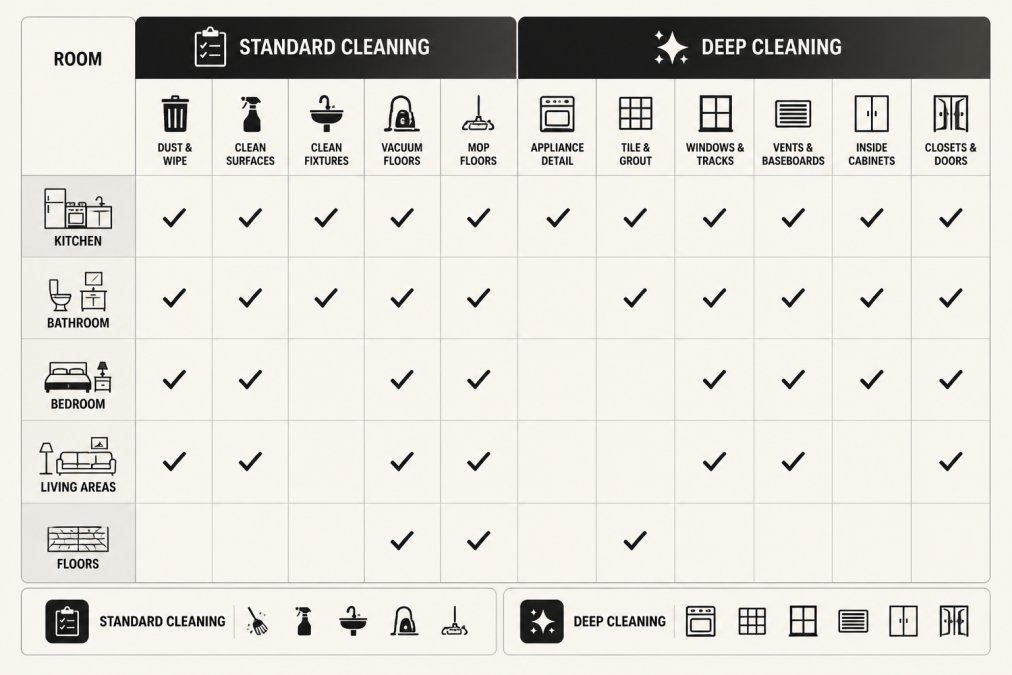
Standard Cleaning Tasks
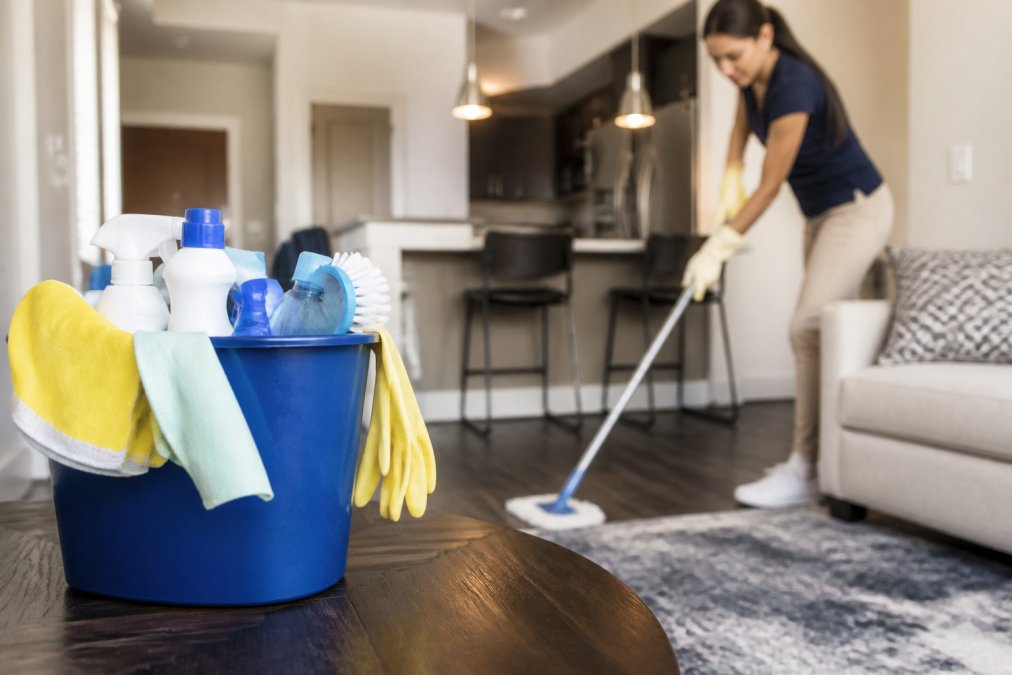
Standard move-out cleaning covers visible, high-traffic areas: vacuuming carpets, mopping hard surfaces, wiping kitchen and bathroom fixtures, dusting, removing trash, and cleaning baseboards, light switches, and windows.
The goal is a fresh, move-in-ready space. Professional cleaners know spotless kitchens and bathrooms drive leasing decisions.
Deep Cleaning and Inspection Points
Deep cleaning addresses areas that deteriorate: inside oven and microwave, refrigerator, behind appliances, cabinets, ceiling corners and vents, baseboards, closet shelves, light fixtures, walls, grout, and carpet shampooing.
Deep cleaning catches issues prospects notice and protects your investment by addressing wear before it becomes damage. A professional partner flags maintenance needs, cracked tiles, scuffed walls, stubborn stains, so you can address them before the next tenant moves in.
Post-Construction Cleaning for Apartments
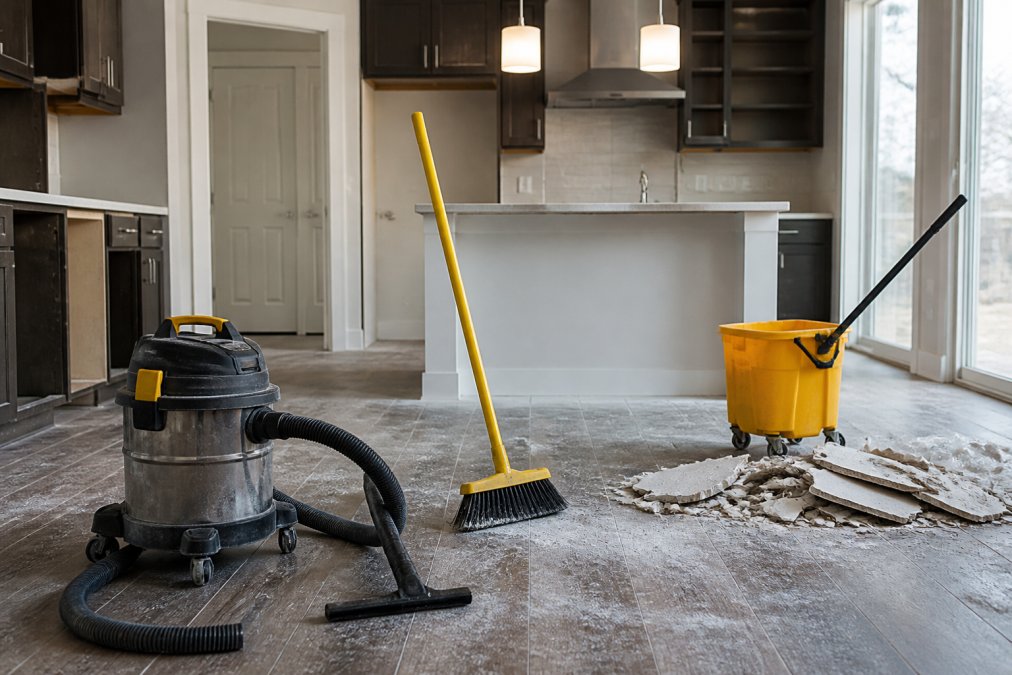
Post-construction cleaning is specialized work most general cleaners can't handle. After renovations, painting, or repairs, units are left with dust, debris, paint overspray, and construction residue that standard cleaning won't remove.
Dust Removal and Equipment Requirements
Post-construction dust settles everywhere, surfaces, cabinets, light fixtures, HVAC vents, corners. Removing it requires industrial-grade equipment: HEPA-filter vacuums, air scrubbers, and specialized tools. Without them, you're just moving dust around.
Professional post-construction services use equipment designed for the job, protect sensitive areas, access high spaces safely, and verify complete dust removal, critical because leftover dust triggers tenant complaints and air quality concerns.
Coordinating with Contractors and Painters
Post-construction cleaning works best coordinated with contractors and painters. Crews need to know what was done, what materials were used, and what surfaces are curing. Paint must dry before wiping; caulk and sealants must set before aggressive cleaning.
A property management cleaning service handling post-construction work sequences tasks correctly, communicates with contractors, and schedules cleaning after construction completion but before tenant arrival, keeping projects moving and preventing rework.
Request Walk Thru Estimate Today →
Property Management Cleaning Services: Scale and Coordination
Managing multiple units across properties requires a cleaning partner who understands scale and distinguishes between unit-based and common-area cleaning. You need a service handling 10, 50, or 100 units across locations without dropping quality or missing deadlines.
Managing Multiple Units Across Properties
A professional cleaning service for apartment communities operates as a partner. They understand your portfolio, leasing calendar, and standards; scale for multiple move-outs; handle emergency turnovers; and track all work and follow-up.
One point of contact prevents chaos. A dedicated project coordinator assigned to your account ensures properties stay on schedule and units stay move-in ready, eliminating ramp-up time with new vendors.
Common-Area Cleaning and Schedules
Common areas, lobbies, hallways, stairwells, laundry rooms, fitness centers, outdoor spaces, require different strategies than unit turnovers.
A professional property management cleaning service should offer tiered common-area programs:
Daily or twice-weekly service for high-traffic areas like lobbies and main hallways. This includes trash removal, floor sweeping and mopping, surface wiping, and spot-cleaning of smudges or spills. Daily service maintains curb appeal for prospects and keeps tenants satisfied.
Weekly or bi-weekly service for secondary hallways, stairwells, and elevator interiors.
Monthly deep cleaning for laundry rooms, fitness centers, and amenity spaces.
Quarterly or seasonal service for less-used areas: exterior walkways, parking structures, and landscaping perimeters.
The key is consistency and coordination.
Handling Occupied-Building Logistics
Occupied-building cleaning requires protocols: crew access without disrupting residents, safe product and equipment storage, and minimized noise during quiet hours (8 p.m.-8 a.m. weekdays, later weekends).
A professional service should have clear policies: scheduled cleaning avoiding peak occupancy, resident notification, safe storage, and resident contact. They should coordinate with leasing to avoid showing/cleaning overlaps and ensure emergency access isn't blocked.
Quality Assurance and Service Standards
Quality assurance separates professional cleaning from adequate cleaning, the difference between passing inspection and costly rework.
Measurable Standards and Accountability
Professional services use checklists and inspection protocols to verify standards. Property managers should see what was cleaned, when, and by whom, with clear accountability and resolution paths for issues.
Documentation and quick resolution mechanisms protect both property and service.
Health, Safety, and Product Protocols
Professional services use safe, effective products appropriate for the space, following protocols for ventilation, handling, and disposal, critical for tenants with allergies or properties with health standards.
Professional partners train staff on equipment use, chemical handling, and protocols for occupied areas, enforcing standards consistently.
Selecting a Professional Cleaning Partner
Choosing the right professional cleaning service affects your operation, leasing timeline, and tenant satisfaction. Wrong choice: missed deadlines and quality issues. Right choice: reliable turnovers and peace of mind.
Request Walk Thru Estimate Today →
Vendor Evaluation Criteria and Contract Framework
When evaluating a cleaning service, look beyond price and create a vendor scorecard addressing these areas:
Experience and Capacity
- How many apartment units do they clean monthly?
- How long in apartment-specific work? General residential cleaning differs from turnover and common-area work.
- Can they handle your volume and timeline? Ask for current clients and capacity confirmation.
- Do they assign dedicated coordinators or use shared dispatch? Dedicated coordinators understand your properties.
Equipment and Capabilities
- Do they own HEPA-filter vacuums and air scrubbers for post-construction and deep cleaning?
- Can they handle post-construction cleaning, or only routine turnover?
- Do they have equipment for carpet shampooing, tile grout cleaning, and hard-surface restoration?
- What products do they use? Request product list and SDS; verify safety for occupied buildings.
Training and Standards
- Are crews trained in apartment-specific cleaning standards? Ask about their training program and how they verify competency.
- Do they conduct background checks on staff? This is standard for services entering occupied units.
- How do they handle quality control? Do they use checklists? Do supervisors inspect completed work before sign-off?
- What is their process for addressing tenant complaints or quality issues? A professional service should have a documented escalation process.
References and Track Record
- Ask for at least three references from property managers they currently serve. Call those references and ask specific questions:
- Do they hit deadlines consistently? What percentage of turnovers are completed on time?
- How do they handle quality issues? Is rework included, or do you pay again?
- Have they scaled with you as your portfolio grew?
- Would you hire them again, and why or why not?
- Ask about their response time for emergency requests (e.g., a tenant breaks a lease early and you need a unit ready in 24 hours).
Insurance and Liability
- Do they carry general liability insurance? Minimum coverage should be $1 million per occurrence.
- Do they carry workers' compensation insurance? This protects you if a crew member is injured on your property.
- Ask for a certificate of insurance naming your property as an additional insured. Never hire a service without this.
Contract Terms and Service-Level Expectations
Your contract should define measurable service standards, not just scope. Include these elements:
Turnaround Time Guarantees
- Standard turnover completion: 48 hours from move-out notification (or your required timeline).
- Post-construction cleaning: completion within X days of contractor sign-off.
- Common-area cleaning: scheduled on specific days and times, with a response time for urgent requests (e.g., 4 hours for spill cleanup).
Quality Standards and Inspection Checklists
- Attach a detailed checklist for each service type (unit turnover, deep cleaning, post-construction, common-area maintenance).
- Define what "complete" means: all items on the checklist must be signed off before the unit is considered ready.
- Specify that rework for missed items is included at no additional cost if reported within 24 hours of completion.
Pricing and Payment Terms
- Unit turnover: flat rate per unit (not hourly, which incentivizes rushing).
- Common-area cleaning: monthly recurring fee or per-visit rate.
- Post-construction: estimate based on scope, with a not-to-exceed cap.
- Include a clause for emergency or after-hours service (if applicable) and any associated premium.
Communication and Reporting
- How will you request service? (Email, phone, online portal?)
- How will you receive confirmation that work is complete? (Photo documentation, signed checklist, email notification?)
- What is the point of contact for issues or questions?
- Will you receive a monthly report of all work completed, units serviced, and any issues flagged?
Flexibility and Exit Terms
- Avoid long-term contracts that lock you in. The best cleaning partners are confident enough to offer month-to-month options or 30-day termination clauses.
- If the relationship isn't working, you should be able to switch without penalty.
- A professional service that performs consistently will earn your business every month; they don't need a contract to force loyalty.
Red Flags to Avoid
During your evaluation, watch for these warning signs:
- Vague pricing: If they won't provide a flat rate or detailed estimate, they're likely to surprise you with add-on charges.
- No references: If they can't provide references from property managers, they either don't have experience or their clients aren't satisfied.
- No insurance documentation: This is a dealbreaker. Never hire an uninsured service.
- Unwilling to sign a contract: A professional service should be comfortable putting their commitments in writing.
- No quality control process: If they don't inspect their own work, quality will be inconsistent.
- Pressure to commit long-term: Legitimate services don't need to pressure you into multi-year contracts.
Take time to evaluate multiple vendors.
Frequently Asked Questions
What should be included in an apartment move-out cleaning checklist?
A comprehensive apartment move-out cleaning checklist covers all surfaces, appliances, and fixtures. Standard tasks include vacuuming and mopping floors, wiping baseboards and light switches, cleaning kitchen appliances inside and out, scrubbing bathrooms including tiles and grout, dusting all surfaces, and checking for odors or stains. Deep cleaning adds carpet shampooing, window washing, cabinet interior cleaning, and detailed appliance degreasing. The checklist ensures consistency across units and helps property managers verify that spaces are truly move-in ready for the next tenant.
How quickly can professional cleaning for apartment communities turn around a unit?
For the critical 48-hour window between move-out and showing, property managers need a partner that prioritizes scheduling flexibility and dedicated coordination.
What is the difference between turnover cleaning and post-construction cleaning for apartments?
Turnover cleaning prepares an occupied or recently vacated unit for the next tenant, focusing on sanitation, stain removal, and move-in readiness. Post-construction cleaning addresses debris, dust, and residue left after renovation, remodeling, or new construction, requiring specialized equipment like HEPA vacuums and trained crews familiar with fine particles and hazardous materials. Post-construction cleaning is more intensive and requires different protocols, so vendors should confirm they have the equipment and training before you hire them.
How do property managers choose a professional cleaning company for apartment communities?
Start by asking prospective vendors about their experience with multi-unit properties, turnaround times, and common-area cleaning capabilities. Request references from property managers managing similar-sized communities and verify they're background-checked, insured, and trained on health and safety protocols. Evaluate their responsiveness to coordination requests, flexibility on scheduling, and willingness to work with your contractors. Ask about quality assurance processes and what happens if you're unhappy with results on initial units, no-lock-in contracts give you room to address issues without being trapped in a long-term agreement.