 how-to
How to Prepare an Apartment for Deep Cleaning
Table of Contents
- Start Here: A Timed Plan to Prepare an Apartment for Deep Cleaning
- What to Do Before a Cleaner Comes: Declutter, Clear, and Secure
- Your Apartment Cleaning Supplies Checklist
- Apartment Deep Cleaning Checklist: Room-by-Room Priorities
- How Long Does Apartment Deep Cleaning Take?
- Should You Stay or Go During the Deep Clean?
- Frequently Asked Questions
Last Updated: October 15, 2026
Start Here: A Timed Plan to Prepare an Apartment for Deep Cleaning
Preparing an apartment for deep cleaning is the work you do before the cleaners arrive: decluttering surfaces, securing pets, clearing access, and staging supplies so a crew can start scrubbing the moment they walk in.
Here's the part most guides skip: professional cleaners don't lose time on the scrubbing. They lose it on the clutter. A unit packed with personal items forces crews to work around furniture, bag up belongings, and guess what's trash.
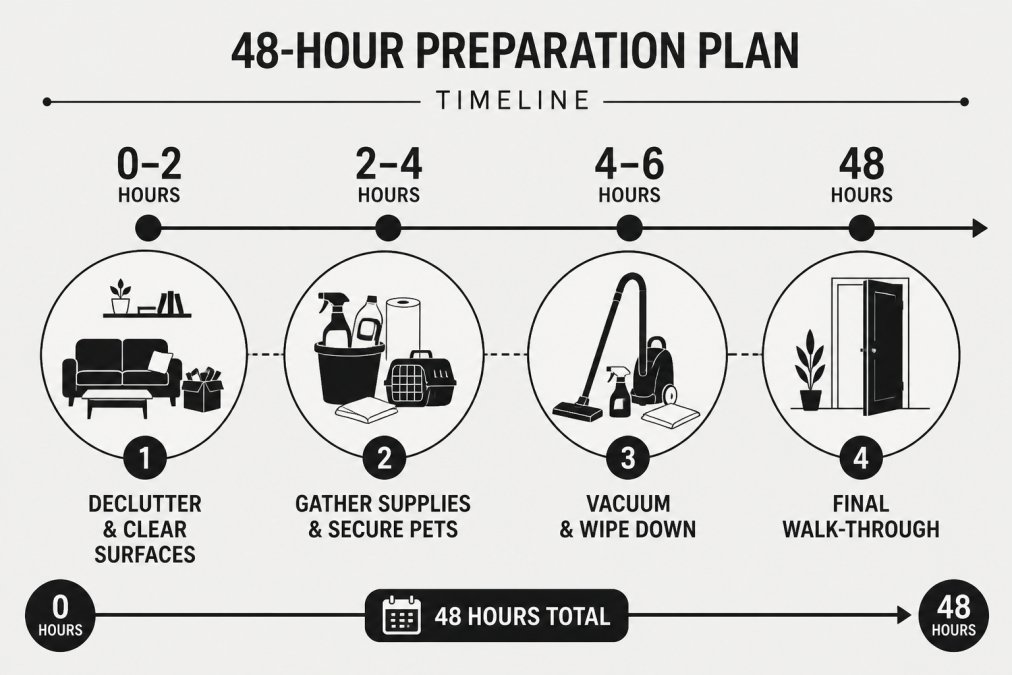
The 48-Hour Prep Timeline
Two days is enough for almost any apartment. Work in blocks:
- Hours 0-2: Declutter counters, floors, and tables. Bag trash and donate piles.
- Hours 2-4: Clear cabinet tops, closets, and under-sink areas. Remove breakables.
- Hours 4-6: Vacuum loose debris, wipe down sticky surfaces, and stage supplies.
- Final 30 minutes: Walk the unit, unlock doors, and move pets to a closed room.
For a rental turnover, add a day. Move-out cleaning usually means dealing with abandoned items, and you want those gone before a crew starts.
Apartment Size, Layout, and Building Access
Studio units prep fast. Three-bedroom walk-ups with stairs and no elevator take longer, mostly because of hauling. Confirm three things before cleaning day:
- Where crews park and whether a loading zone is needed
- Which elevator or stairwell they'll use
- Whether a key, fob, or lockbox code gets them in
Shared buildings add friction. A locked trash room or a freight elevator that needs scheduling can stall a whole job. Sort that out in advance, not on the day.
What to Do Before a Cleaner Comes: Declutter, Clear, and Secure
Declutter first, clear second, secure third. That order matters because each step depends on the one before it. You can't wipe a counter that's buried in mail, and you can't secure a room that's still full of loose items.
Start with surfaces. Counters, tables, nightstands, and bathroom vanities should be empty. Anything you want to keep goes in a box and out of the way. Cleaners will move small items to clean underneath, but they won't sort your belongings.
Next, clear access. That means:
- Pull furniture slightly away from walls
- Roll up rugs or move them to one side
- Empty the sink and dishwasher
- Remove items from the shower and tub
- Take down fragile decor from shelves
Then secure valuables. Jewelry, cash, medications, and documents should leave the unit or go in a locked drawer. This isn't about distrust. It's about removing any question of where something went.
Pets, Children, and Household Safety
Pets and kids change how a cleaning crew works. Most companies ask that animals be secured in a closed room, a crate, or off-site during service. Cleaning products and open doors are a bad mix with a curious pet or a toddler.
Safety prep looks like this:
- Board pets for the day or confine them to one closed room
- Pick up toys, small parts, and anything a vacuum could swallow
- Move medications and cleaning chemicals out of reach
- Tell the crew about allergies or sensitivities in advance
- Keep children with a caregiver, not in the unit
If you're managing a vacant rental, pet and child concerns mostly disappear. But check for left-behind pet hair, litter boxes, and food. Those slow down a turnover clean more than almost anything else.
Request Walk Thru Estimate Today →
Your Apartment Cleaning Supplies Checklist
A good apartment cleaning supplies kit covers five jobs: dusting, wiping, scrubbing, vacuuming, and mopping. You don't need a closet full of specialty products. You need the right basics in one place, and in an apartment, you need them to fit in a cabinet, not a garage.
| Tool | Job | Where It Matters Most |
|---|---|---|
| Microfiber cloths | Wipe and dust | Counters, fixtures, glass |
| Extendable duster | Reach high spots | Ceiling corners, light fixtures |
| Vacuum with attachments | Lift debris | Floors, baseboards, crevices |
| Scrub brush and sponges | Break up grime | Sink, tub, shower, tile |
| Mop and bucket | Finish floors | Kitchen, bathroom, hallways |
| Squeegee | Clear glass | Windows, shower doors |
| Mild soap and warm water | Everyday cleaning | Most surfaces |
| Baking soda and vinegar | Cut odors and buildup | Drains, appliances, stains |
Check Your Supplies Before Cleaning Day
Running out of a product mid-clean is the most common reason a deep clean stalls. Do a five-minute inventory the day before:
- Count your cloths. A one-bedroom deep clean can burn through 8 to 12 microfiber cloths once you separate bathroom, kitchen, and glass. If you have fewer than six, wash a load first.
- Test your vacuum. Empty the canister or replace the bag, cut hair off the brush roll, and confirm the crevice tool and upholstery attachment are on hand. A clogged vacuum spreads dust instead of removing it.
- Check spray triggers and nozzles. A clogged nozzle wastes product and time. Soak the head in warm water if output looks weak.
- Confirm you have enough of each cleaner. A standard 32 oz bottle of all-purpose cleaner covers roughly one apartment deep clean. Buy a backup for kitchens and bathrooms.
- Verify ventilation. Open windows before you start, and know which products require it. Bathrooms and kitchens without working exhaust fans need extra air movement.
Product Compatibility and Safety
Not every cleaner plays well with every surface. A few rules that prevent damage:
- No abrasives on glass, stainless, or acrylic. Scouring powder scratches these permanently. Use a non-scratch pad instead.
- Match the cleaner to the finish. Sealed granite, quartz, and laminate each have different tolerances. When in doubt, use mild soap and water.
- Don't mix bleach with vinegar or ammonia. The fumes are toxic. If you're not sure what's safe to combine, stick to one product per surface and rinse between.
- Keep a dedicated bathroom cloth and a dedicated kitchen cloth. Cross-use spreads bacteria from the toilet area to food surfaces.
Stage Supplies in One Spot
Apartment storage is tight, so don't scatter supplies across rooms. Load everything into a single caddy or laundry basket and park it in the kitchen or a hallway. Crews work faster when supplies sit together instead of being hunted down room by room. If you're prepping for a professional crew, leave the caddy where they'll see it first, usually just inside the entry.
Apartment Deep Cleaning Checklist: Room-by-Room Priorities
Room order matters. Clean from the top down and from the back of the unit toward the door. Dust falls, so you dust high surfaces first, then work your way to the floors. That's the core of any apartment deep cleaning checklist, but the bigger question is how much cleaning your unit actually needs. Scope drives priority.
First, Match the Scope to the Condition
Before you pick a room, decide which of these four situations you're in. Each one changes what you prep and how long it takes.
- Routine buildup (lived-in, cleaned monthly). Light dust, some kitchen grease, normal bathroom film. Prep is mostly decluttering and clearing surfaces. Expect 2 to 3 hours of prep.
- Heavy grime (months since a real clean, pets, smoking, or cooking-heavy kitchen). Grease on cabinet fronts, soap scum on tile, dust on every ledge. Add degreasing time and expect to soak fixtures before scrubbing. Prep can run 4 to 6 hours.
- Move-in cleaning (unit was vacant or previously occupied). Focus on what the last occupant left: inside cabinets, inside the oven, inside the fridge, behind the toilet, and in closets. Prep is mostly removing abandoned items and checking for pests.
- Professional service (you're prepping for a crew). Your job is access and clearance, not scrubbing. Empty surfaces, move furniture, secure valuables, and stage supplies. The crew handles the rest.
If you're not sure which bucket you're in, walk the kitchen and bathroom first. Those two rooms reveal the true condition of the unit faster than anywhere else.
Kitchen and Bathroom
The kitchen and bathroom are the two hardest rooms in any apartment. Both have water, both have fixtures, and both collect buildup in places people forget. Do these first while you have energy.
Kitchen priorities:
- Wipe cabinet fronts and handles, grease collects here first
- Clean the stovetop, oven, and range hood
- Pull out the fridge and sweep behind it
- Descale the sink and run the disposal
- Wipe the microwave inside and out
Bathroom priorities:
- Scrub the tub, shower, and tile grout
- Clean the toilet base, bowl, and behind the seat
- Wipe the sink, faucet, and mirror
- Wash the floor and baseboards
- Clear hair from drains
Bedroom and Living Room
Bedrooms and living rooms are mostly dust and floors. The work is steady but simple.
- Dust ceiling corners, fans, and light fixtures first
- Wipe blinds and window coverings
- Dust shelves, frames, and furniture tops
- Vacuum under the bed and behind furniture
- Mop or vacuum the floors last
Windows deserve their own pass. Wipe the glass with a squeegee, then clean the tracks and sills where dust and dead bugs collect.
Prep Priorities When Time Is Short
If you only have an hour before a crew arrives, do these in order:
- Clear every counter, table, and floor surface.
- Empty the sink, dishwasher, and shower.
- Secure pets, valuables, and medications.
- Unlock the door and confirm access.
Skip the deep scrubbing. A professional crew will handle it faster than you can, and your time is better spent on clearance.
Request Walk Thru Estimate Today →
How Long Does Apartment Deep Cleaning Take?
Prep time is separate and usually adds 2 to 4 hours of your own work.
Add time for:
- Heavy buildup in kitchens and bathrooms
- Pet hair embedded in carpets
- Post-construction dust in every crevice
- Move-out units with abandoned items
If you're working against a tight turnover window, prep the unit the day before.
Should You Stay or Go During the Deep Clean?
Leave the apartment during the deep clean. Cleaning crews work faster without someone in the way, and many products need ventilation.
For property managers, this is easy. Vacant units mean no one to work around.
If you're coordinating a turnover and want the prep handled for you, Squeaky Clean Plus runs apartment turnover and post-construction cleaning with dedicated project coordination on every job.
Deep cleaning an apartment is really a coordination problem, not a scrubbing problem.
Squeaky Clean Plus handles that handoff for apartment communities and vacant homes across Denver.
Start an estimate with Squeaky Clean Plus and get every unit move-in ready for the next tenant.
Frequently Asked Questions
How do you prepare an apartment for a deep cleaning?
Start by decluttering and clearing surfaces so cleaners can reach every area. Gather your apartment cleaning supplies, including microfiber cloths, a vacuum with attachments, scrub brushes, and mild soap. Secure pets and valuables, then do a quick vacuum and wipe-down to remove surface dirt. A timed plan helps: declutter first, then supplies, then safety checks. This preparation makes the deep cleaning faster and more thorough.
What should you do before a professional cleaner arrives?
Before a cleaner comes, put away personal items, clear countertops and floors, and secure pets in a separate room. Empty trash, load the dishwasher, and remove fragile decor. Confirm parking or building access, and leave any special instructions. A clear space lets the crew focus on deep cleaning tasks like scrubbing appliances, fixtures, and floors instead of moving your belongings.
How long does it take to deep clean an entire apartment?
The time depends on square footage, condition, and whether you have pets. If you prepare ahead by decluttering and clearing surfaces, the crew can work faster and focus on detailed tasks.
What are the best cleaning supplies for an apartment?
For apartment cleaning supplies, stock microfiber cloths, a vacuum with attachments, a duster, scrub brushes, sponges, scrub pads, a mop and bucket, and a squeegee. Use mild soap, warm water, baking soda, and vinegar for most surfaces. Keep separate cloths for kitchen and bathroom to avoid cross-contamination. A caddy keeps everything organized, and a squeegee speeds up window and shower cleaning.